
Windsurf: The AI IDE That Sold You Flow and Gave You a Quota Meter
Windsurf pitches itself as the enterprise-grade AI IDE for serious codebases. The evidence points to a useful editor wrapped in quota fog: daily and weekly usage allowances, variable message costs, post-acquisition identity blur, and real users complaining that the meter now hurts more than the bugs.

Windsurf sold flow. The product you actually meet is a meter with an IDE attached.
Windsurf’s pitch is clean enough to put on a conference hoodie: an AI-powered IDE for large, complex codebases, built by Cognition, armed with proprietary coding models, Fast Context, Codemaps, enterprise security, and the soothing promise that developers can stay "in the flow" while an agent chats, writes code, and runs commands beside them. The official comparison page goes harder: Windsurf says it was the first IDE with an integrated agent, says SWE-1.5 is 13x faster than Sonnet 4.5, says Fast Context is 10x faster than frontier models for codebase retrieval, and says it is trusted by over a million developers. 1
That is the brochure. The lived experience, judging by the receipts, is more like: nice editor, real agentic features, then a quota system that turns every prompt into a tiny casino pull. The product doesn’t just ask whether your code compiles. It asks whether your patience does.
| What Windsurf sells | What the evidence says |
|---|---|
| "Enterprise & large codebases" with Fast Context and Codemaps. 1 | Third-party testing found real strengths, but also called the credit system confusing and the value poor for solo developers and small teams. 2 |
| A "next-generation AI IDE" where the agent can chat, write code, and run code. 3 | Users complain that paid models stop mid-task, quotas arrive before work is done, and support feels automated when billing breaks. 2 |
| A $20/month Pro plan with "increased quotas" and frontier model access. 4 | A power user said a pricing change made costs explode to $80 for 5-10 small prompts after spending over $2,500 on the product. 5 |
The hype pitch: Cursor, but wearing an enterprise badge and carrying a surfboard
Windsurf’s best story is simple: Cursor is for indie hackers and small teams; Windsurf is for the scary codebase with 900 packages, seven deployment rituals, and one senior engineer named Brad who knows why the billing service imports a CSS file. On its own comparison page, Windsurf positions itself as the grown-up AI IDE: large codebases, enterprise teams, proprietary models, Codemaps, compliance, and support for regulated industries. 1
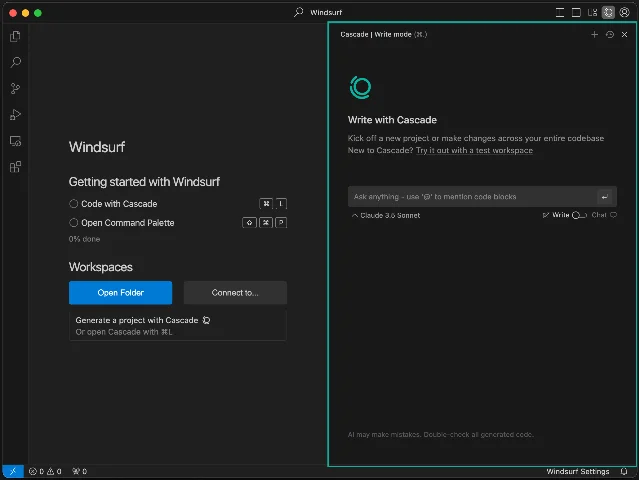
There is actual product there. The docs describe an agent panel where you can chat, write code, and run code; open folders or connect to remote servers; import VS Code or Cursor configuration; and use memories and rules to customize agent behavior. 3 This is not a vaporware landing page selling "AI transformation" with six stock photos of people pointing at glass. It is an editor, an agent, and a workflow wrapper around modern coding models.
The third-party review from Hack’celeration is the annoying part for anyone trying to do a clean roast: it admits the product can work. Its hands-on test gave Windsurf 3.8/5, said installation was fast, said Memories started suggesting architecture patterns after two days, and reported that on a 50,000-line React/Node project Windsurf matched existing patterns 78% of the time. It also said Lint Fixing auto-fixed 60% of lint issues and natural-language terminal commands handled 80% of tested CLI operations. 2
So no, the verdict is not "Windsurf is fake". That would be too easy and also wrong. The sharper problem is worse: Windsurf has enough useful product inside it to get developers dependent, and then enough quota fog outside it to make them feel like they are debugging a slot machine.
Loading content card…
Reality check: the meter is the main character
Current pricing is already a branding jump scare. Go looking for Windsurf pricing and you land in Devin-land: Free, Pro at $20/month, Max at $200/month, Teams at $80/month for the plan plus $40/month per full developer seat, and Enterprise as the usual "let’s talk" fog machine. 4
The FAQ says paid plans include a usage allowance that refreshes daily and weekly. It also says cost per message varies based on the model used, task size, task complexity, and reasoning required. If you go beyond included usage, you can purchase extra usage consumed at API pricing. To make usage last longer, the official advice is to control prompt size and switch to smaller models for routine tasks. 4
Pause there. The product is sold as an agentic IDE that understands your codebase, reasons across files, and keeps you in flow. The pricing FAQ then tells you to ration context and use smaller models if you want the meter to last. That is not "flow". That is Weight Watchers for prompts.
And the complaints are not theoretical. One r/windsurf post with 158 score and 145 comments said Windsurf’s new pricing changes "completely broke the experience". The author said they had spent over $2,500 on Windsurf in prior months, but after the update paid $80 for just 5-10 small prompts that used to cost a fraction of that. They called the biggest issue a lack of transparency and said they were considering leaving for good. 5
That complaint has the exact texture that AI app marketers hate: not some drive-by hater, but a formerly happy power user who paid real money and then watched the economics mutate under their feet.
Loading content card…
The comments rhyme. One user wrote, "4 prompt, 1 plan, puff. End of quota again." 6 Another said, "my costs have exploded," while asking for alternatives. 7 A different commenter in the hype thread said Windsurf was "probably the worst AI coding tool" they had used in 2026. 8 Another wrote that users are "better off just using Claude," because Windsurf makes dumb mistakes and credits can become useless if you stop subscribing. 9
This is the anti-magic trick: sell an agent that thinks across your repo, then make serious use feel like checking a prepaid phone balance in 2007.
The acquisition subplot: when your IDE becomes someone else’s chess piece
The business drama makes the product feel even less stable. Cognition announced a definitive agreement to acquire Windsurf, including its IP, product, trademark, brand, business, and people. In the same announcement, Cognition said Windsurf had $82 million in ARR, 350+ enterprise customers, and hundreds of thousands of daily active users. 10
TechCrunch reported the deal came after Google hired away Windsurf’s CEO, co-founder, and research leaders in a $2.4 billion reverse-acquihire, and after OpenAI’s reported $3 billion offer expired. It also reported that Anthropic had cut Windsurf’s direct Claude access in June, with some customers switching to other services such as Cursor. 11
For investors, this is thrilling. For developers, it is exhausting. Your IDE should not feel like a custody dispute between foundation-model suppliers, rival labs, and whichever startup had the most cinematic weekend.
| Signal | Why it matters for users |
|---|---|
| Cognition says it acquired Windsurf’s IP, product, trademark, and brand. 10 | The editor is no longer just "Windsurf". It is part of Cognition’s Devin stack, and the pricing/docs already reflect that identity blender. |
| TechCrunch says Windsurf had a model-access disruption around Claude before the deal. 11 | AI IDE quality depends heavily on model access. If the best model gets yanked, your 「agentic workflow」 becomes a UI around a supply-chain problem. |
| Cognition says Windsurf will eventually be integrated into its products. 10 | The thing users bought may keep moving under them. Sometimes that means better integration. Sometimes it means you wake up in a new product funnel. |
The catch: Windsurf is useful, which is exactly why the flaws sting
Bad AI tools are easy to ignore. Windsurf’s problem is that it is not merely bad. It is plausibly useful in the exact places where developers are desperate: legacy codebases, multi-file edits, onboarding, and turning vague feature requests into a starting implementation.
That is why the quota mess lands so hard. If a toy chatbot asks you to upgrade, you close the tab. If your coding environment learns your repo, suggests edits, runs commands, and becomes part of your muscle memory, then a pricing change is not just a price increase. It is a workflow eviction notice.
The community-score data is ugly. Hack’celeration’s review aggregated 15 Trustpilot and Capterra reviews into a 1.4/5 community score, with only 7% recommending it. The review summary said complaints centered on an overnight pricing and credit-model change, unclear limits, billing support, paid upgrades that left accounts stuck on Free, and product instability. 2
Again: this is not proof that every developer will have a miserable time. It is proof that the shiny official promise is missing the part users actually care about: predictable cost, visible limits, and support that does not vanish when the bill gets weird.
Verdict: good editor, bad trust layer
Windsurf is not the worst AI coding product. That honor is a crowded cage match. It has real features, credible enterprise traction, and enough agentic behavior to make developers understand why AI IDEs are eating attention.
But the roast is simple: Windsurf sells flow while making users think about quotas, model choice, hidden consumption, acquisition fallout, and whether the next prompt will cost pocket change or lunch. The official pitch says 「large codebases」. The pricing page says 「control the size of your prompts」. The marketing says 「agentic IDE」. The complaints say 「end of quota again」.
What are you really buying? Not a reliable junior engineer. Not a calm IDE. You are buying a promising code editor attached to a cloudy usage meter inside a company that just got folded into another hyped AI coding company.
Use it if you want the editor and can tolerate the economics. Do not use it because the landing page said it will keep you in flow. The flow is real until the meter shows up. Then you are not surfing. You are paying for waves by the gallon.
References
- 1Windsurf vs Cursor
- 2Windsurf Review 2026
- 3Welcome to Devin Desktop
- 4Plans and Pricing
- 5Reddit: Windsurf pricing changes
- 6Reddit comment on Windsurf quota
- 7Reddit comment on Windsurf costs
- 8Reddit comment on Windsurf experience
- 9Reddit comment comparing Windsurf to Claude
- 10Cognition’s acquisition of Windsurf
- 11TechCrunch: Cognition acquires Windsurf
Add more perspectives or context around this Post.